Monday, 25 April 2016

Possible Design Tasks

Poster

Must include:
  • A title 
  • A main image
  • A slogan
  • Actor's names
  • A release date
  • Credits
  • A colour pallet suitable for the sci-fi genre

DVD Case

Front cover must include:
  • A title
  • A main image
  • A slogan
  • Actor's names
  • A release date
  • Age rating
  • Suitable colour pallet for the sci-fi genre
Back cover must include:
  • Plot summary text
  • Credits
  • Minor images
  • Similar colour pallet to the front

Website

Must include:

  • The film title in the header
  • A main image from the film
  • A video clip from the film/trailer
  • Text about the film
  • Links for; games, chat, events, news, blogs, images and clips
  • Social media links
  • Copyright information in the footer
  • Suitable colour pallet for the sci-fi genre

Storyboard

Must include:
  • Shot numbers
  • Shot duration
  • Sketches of each shot
  • Shot type (e.g. ECU, CU, MCU, M, LS, ELS etc)
  • Camera movement (e.g. zoom in, zoom out, Hitchcock zoom, pan, tilt, tracking etc)
  • Camera angle (e.g. high angle, low angle, eye level, birds eye, worms eye etc)
  • Editing information (e.g. fade to black, fade to white, continuity editing, parallel editing, eye-line match, sound bridge
  • Sound information (e.g. non-diegetic music, diegetic dialogue- quote some, voice over, diegetic ambient sound, sound effects etc)
  • If it's a trailer, put the production company logo in the first box and put the film title and release date in the last box

Terminology

Each design will earn extra marks if the correct media terminology is used. Good terms to include in an answer are:
  • Star vehicle (main actor)
  • Mise-en-scene 
  • Props
  • Genre conventions
  • Audience appeal
  • Protagonist/antagonist
  • Diegetic/non-diegetic
  • Colour pallet
  • CGI/SFX
  • Narrative
  • Genres/sub-genres/hybrid
  • Mainstream/niche audience
  • Representation
  • Ambience

Monday, 11 April 2016

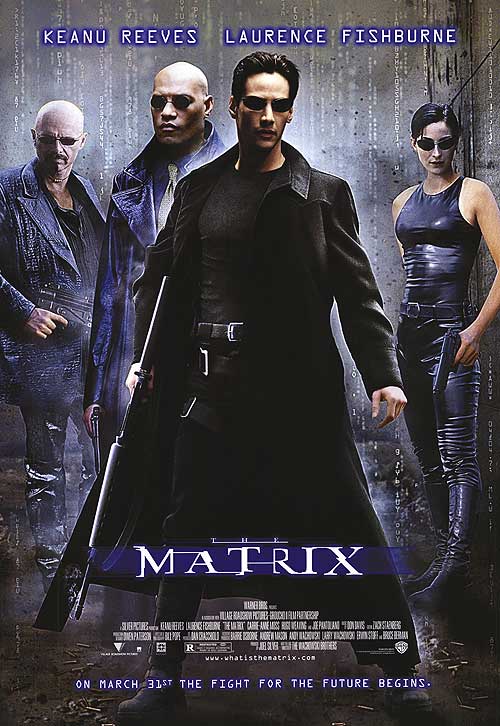
The Matrix Poster Analysis

The setting

The background hints towards a futuristic setting, but is very vague on giving a visual description of where they are. The setting also connotes the sci-fi genre, due to the coding on the walls. It's also very dark to represent an older audience, as they'll be more attracting to a serious, professional looking poster. Children are attracted to brighter, more colourful posters as it's more interesting to look at.

Props

They're all holding guns to connote action as a sub genre, stereotypically enticing the male gender. The other demographic group the props will typically appeal to are males in the age range of around 18-40, as they're more likely to be interested in violent scenes. The star vehicle has the largest weapon to connote his power.

Costumes

They're all wearing very dark outfits, with three of them wearing blue and the star vehicle wearing black, to emphasise his importance in the movie. The only woman on the poster is shown wearing tight clothing, as back when this movie was released females were popularly used as sex appeal as a way to attract some males to watch the movie. The female can also be used to represent the female audience, to attract a wider range of people to see their movie in cinemas.

Type of shot/camera angle

It uses a long shot, so as to display the entire length of each character. This gives the poster an opportunity to show off their outfits, posture and large props (as Keanu Reeves is holding at the front); these all help connote the genre and tone of the movie. A slightly low-angle shot is used, to make the characters appear more intimidating and powerful.

Lighting

A lot of the light is centred around the star vehicle to make him stand out clearly against the others, and to emphasise even further his importance- this is backlighting, the process of illuminating the subject from the back to make him the first thing most people will look at. 

All posters can include:
  • Film title
  • Main image
  • Institutional logos
  • Production information
  • Tagline
  • Release date/information
  • Box office lure
  • Plug
  • Rating
  • Quote/review and reviewer name
  • Website link
  • Social media logos

Thursday, 24 March 2016

Media Mock Exam

Results

On the afternoon of the 11th of March I walked into the exam hall for my first ever attempt at a media exam. I left with 45/60 marks, a solid B. For my actual exam in May, the key things I need to remember are:

  • Make sure both case studies are very detailed
  • When describing the pitch of your own movie, explain the sci-fi link at the start
  • Explain the appeal of your movie
  • Include the release date and colour on poster for own movie
  • Outline advantages of advertising techniques
  • Include details of where and when trailer for own movie may be released
  • Start preparing a day before, not on the day!!
  • Think of a title and slogan for own movie before walking in to the exam 
  • Thoroughly research any details that may be necessary for the two case studies in the exam 
  • Make sure you have actors/actresses for own movie in mind
  • Use media language

Sci-fi pitch ideas

I want my sci-fi film to be capable of relating to a large variety of people, by using ideas from real life
issues modern people suffer. Bullying and racism is still a big issue in today's society, as some people still enjoy discriminating against others they deem as 'different' and 'inferior' to them. My sci-fi film will cover these aspects, with an alien joining a new school- where everyone else is a human. Some people believe that history is doomed to repeat itself, as it will in my sci-fi movie. Just like black people had to suffer prejudice and hatred for centuries, this movie shows aliens going through it too. For anyone who's had to endure anything similar to this will be able to relate to my character. One convention of a sci-fi film is that there tends to be a hero team- my alien's small group of friends who actually accept him for who he is. To help stick the sci-fi genre I'll set it in a futuristic world, with flying cars, holograms etc. 

Monday, 29 February 2016

Audience Theory

Mainstream or niche?

Some science fiction films are mainstream- they appeal to a very wide range of people (e.g. Hollywood movies so they can make more money).
Some science fiction films are more niche- they appeal only to a small specific group of people (e.g. more independent and low-budget films as they're under less pressure and can take more risks).

Demographics

Demographics is one way of dividing up the audience into certain groups. Each group is assumed to have similar ideas and interests. Marketers use this idea of demographic groups to target advertising and promotion. It's based on factual information. Demographics include;
  • Gender
  • Age/stage
  • Occupation
  • Region/location
  • Ethnicity
  • Class

Psychographics

Psychographics is less about facts such as age, and more about attitudes and values. The audience can be divided up into categories like;
  • Survivors- who like security and routine
  • Social climbers- who like material wealth and status symbols
  • Care givers- who believe in 'caring and sharing'
  • Explorers- who are interested in personal growth and social change

Audience profile of a typical sci-fi fan

They would typically be a white caucasian educated male living in an English speaking country, in their late teens or early adult years. They would be middle class, and typically a student. They would be a social climber, interested in the special effects and new technologies that sci-fi films include. They would also be an explorer, excited to see what new ideas a sic-fi film can  create.

Uses & Gratifications Theory (U&G)

This is a media studies theory that tries to explain why people choose and use certain media products. The theory says that we use them to satisfy certain needs. 
  • Entertainment and diversion- taking you away from your own problems and your own world for a while- escapism, to give you excitement in your life, to stop you being bored.
  • Surveillance and information- finding out about new things and places, scientific possibilities and problems, helping you to get knowledge about science, the world and what is happening.
  • Personal identity- comparing yourself to people in films, wondering how you would act in the same situation, thinking about how you would feel about various issues and conflicts.
  • Personal companionship- getting accustomed to the characters as if they are friends; getting involved in the plot and wanting to find out what happens to people; discussing films and their issues with other people, having something to talk about with other people.

Thursday, 25 February 2016

Genre Appeal

How, and why, do Science Fiction Films appeal to audiences?

Science Fiction bring something unique to the cinema screen, something imaginative and thought provoking. Each sci-fi film brings different ideas on things most people wouldn't put into consideration. With popular series such as Star Wars and Star Trek it makes people excited for things like space and time travel that could be possible in the future. In movies such as The Hunger Games, it's exciting to see a powerful female protagonist take a stand against evil in a futuristic setting that no one will recognise and be intrigued about- willing to watch more. Normal action films can get repetitive with their fighting scenes but sic-fi films have the power to be more creative and interesting, and leave their audiences with a lot to think about afterwards.

Sci-Fi and Media Language

Genre Conventions

What does convention mean?
A convention is a key ingredient in a specific genre of media text. They are the things that we expect to see in particular types of films. Examples of Sci-Fi genre conventions include:

Narrative (storyline)- 
  • robots/aliens vs man 
  • saving the world 
  • discovering a new world/race of creature 
  • intergalactic space war
  • time travel 
  • rise of AI
Characters- 
  • aliens 
  • robots 
  • mutated humans 
  • male (tends to be human) protagonist 
  • wise, older character 
  • other worldly antagonist
  • hero team
Mise en scene (setting, props, costume etc)- 
  • futuristic/new worlds
  •  dystopian cities 
  • space
  • space ships 
  • hi-tech vehicles/weapons (e.g. lasers)
  •  futuristic technology (lots of computers)
  •  colourful and strange costumes
  • uniform (human team) 
  • make-up kept basic for protagonist characters 
  • green, silver/metallic, black, neon
Themes- 
  • the future 
  • end of the world 
  • good overcoming evil 
  • victory of human ideologies over others 
  • safeguarding the human race
  • loyalty and teamwork
  • negative impact of technological advancement 
  • humans destroying their own planet 
  • the idea of a small few against a large enemy
Other- 
  • innovative special effects 
  • CGI 
  • modern/metallic looking font and graphics 
  • intense/dramatic music 
  • directors such as James Cameron, George Lucas, J.J. Abrams, Steven Spielberg

Monday, 22 February 2016

SCIENCE FICTION

What is science fiction?

Science fiction is a genre of fiction dealing with the impact of imagined innovations in science or technology, often in a futuristic setting.
It is a realistic speculation of what might happen in the future.

Sci-fi: the genre

Science fiction films have entertained audiences for many years, usually linked to common fears that particular generation share. It is sometimes difficult to define a science fiction film as many hybrid films have been created with a mix of genres- The Hunger Games being a popular example. Science fiction contains many subgenres;
  • ALIEN INVASION- Independence Day, Alien
  • NUCLEAR THREAT/CATASTROPHE- 2012, The Day After Tomorrow
  • MUTATIONS OF CREATURES- X-Men, Deadpool
  • SPACE/TIME TRAVEL- Star Trek, Star Wars, Doctor Who